URL vs Slug: What’s the Real Difference? (SEO Guide + Examples)
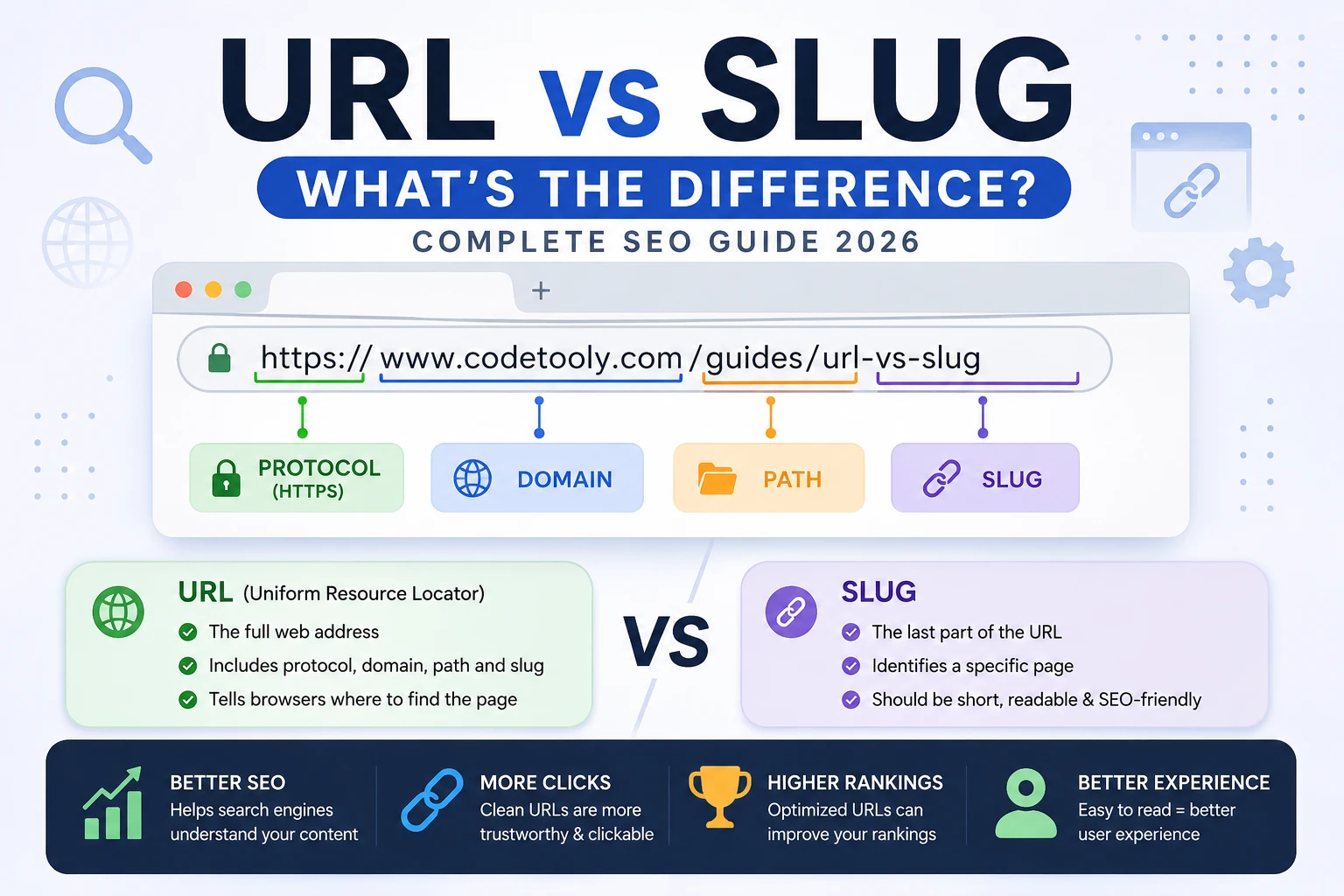
If you are learning SEO, you have probably seen the terms "URL" and "slug" used interchangeably. While they are closely related, they are not the same thing.
Understanding the difference between a URL and a slug is essential for SEO. Many beginners ask: what is a slug in a URL and how does it affect rankings? This guide explains everything with real examples.
URL vs Slug: Quick Comparison
| Feature | URL | Slug |
|---|---|---|
| Definition | Full web address | Last part of the URL |
| Example | https://example.com/blog/seo-tips | seo-tips |
| SEO Impact | Medium | High |
| Editable | Partially | Fully |
What Is a URL?
A URL (Uniform Resource Locator) is the full address of a webpage on the internet.
What Is a Slug?
A slug is the last part of a URL that identifies a specific page in a readable, SEO-friendly format.
Main Difference Between URL and Slug
- The URL is the complete web address
- The slug is just a part of the URL
Why This Difference Matters for SEO
- Better indexing
- Improved rankings
- Higher CTR
Best Practices for Slugs
- Use lowercase letters
- Use hyphens
- Keep it short
- Include keywords
Best Practices for URLs
- Keep them clean
- Avoid parameters
- Use structure
Examples: Good vs Bad
Good:
- /guides/url-vs-slug
- /seo/slug-guide
Bad:
- /page?id=12345
- /post_123_slug!!!
How to Create the Perfect Slug
👉 SEO URL Best Practices Guide
FAQ
What is a slug in a URL?
The last part of a URL that identifies a page.
Is slug important for SEO?
Yes, it helps rankings.