What Is URL Structure in SEO? (Complete Guide)
URL structure is a critical SEO factor that helps search engines and users understand your website content.
A well-structured URL improves rankings, usability, and site organization.
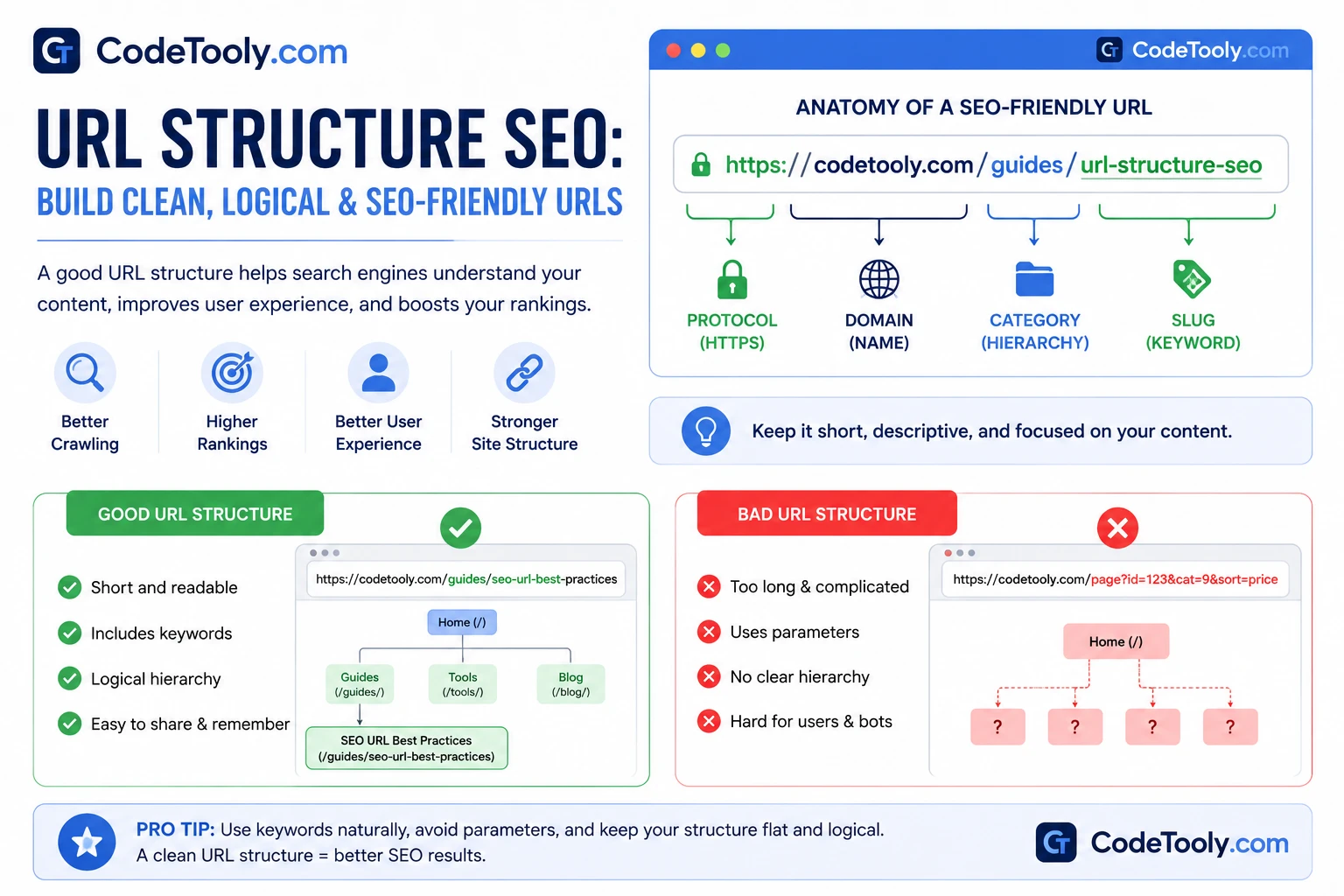
What Is URL Structure?
URL structure refers to how URLs are organized on your website, including folders, categories, and slugs.
Example of a good structure:
https://codetooly.com/guides/seo-friendly-urls
Bad structure:
https://codetooly.com/page?id=123
Why URL Structure Matters for SEO
- Helps search engines understand content hierarchy
- Improves user experience
- Boosts click-through rate (CTR)
- Supports internal linking
Key Elements of a Good URL Structure
1. Logical Hierarchy
Use categories to organize content clearly.
Example:
/guides/seo/url-structure
2. Keyword Optimization
Include relevant keywords naturally in URLs.
3. Short and Clean URLs
Avoid unnecessary words and long paths.
4. Use Hyphens
Separate words using hyphens (-), not underscores.
5. Lowercase Letters
Keep URLs consistent and avoid duplicates.
Good vs Bad URL Structure
Good:
- /guides/seo-friendly-urls
- /blog/url-optimization-tips
Bad:
- /page?id=456
- /post_12345
Best URL Structure Format
The ideal format is:
https://domain.com/category/keyword
Example:
https://codetooly.com/guides/url-structure-seo
Common URL Structure Mistakes
- Using dynamic URLs with parameters
- Creating deep nested URLs
- Keyword stuffing
- Changing URLs without redirects
URL Structure vs URL Slug
The URL structure includes the full path, while the slug is just the final part.
Example:
Structure: /guides/seo-friendly-urls
Slug: seo-friendly-urls
FAQ
What is the best URL structure for SEO?
A short, clean, and keyword-rich structure with logical hierarchy.
Do URLs affect rankings?
Yes, they help search engines understand your content and improve CTR.
How many folders should a URL have?
Keep it minimal, ideally 1–2 levels deep.
Conclusion
A well-optimized URL structure improves SEO, usability, and site organization. Keep URLs simple, readable, and keyword-focused.