What is a URL Slug? (Beginner-Friendly Guide + Examples)
A URL slug is the part of a web address that identifies a specific page in a readable way. It usually comes after the domain name and helps both users and search engines understand the content.
Example:
https://example.com/blog/seo-tips
In this example, "seo-tips" is the slug.
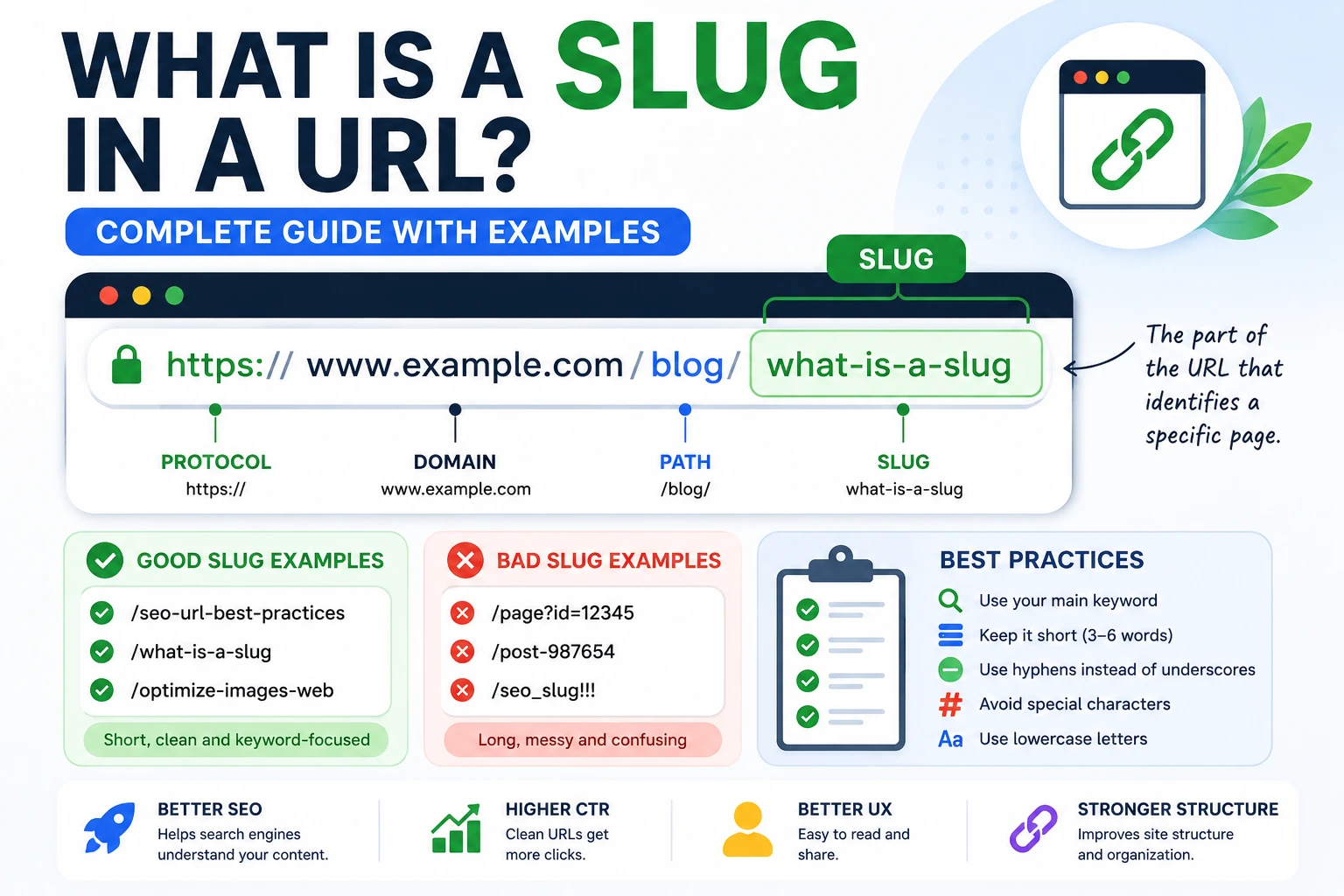
URL Slug Meaning
The meaning of a URL slug is a human-readable part of a URL that describes the content of a page. It is designed to be simple, clear, and optimized for both users and search engines.
What is a Web Slug?
A web slug is simply another name for a URL slug. Developers and SEO professionals use this term interchangeably to describe the last part of a URL.
Why URL Slugs Matter for SEO
Search engines use URLs to understand page content. A clean and optimized slug can improve rankings and increase click-through rates.
- Improves readability
- Helps search engines understand content
- Increases click-through rate (CTR)
- Enhances user experience
Slug Examples (Good vs Bad)
Good Slugs:
- /seo-url-best-practices
- /what-is-a-slug
- /optimize-images-web
Bad Slugs:
- /page?id=12345
- /post-987654
- /seo_slug!!!
How to Create an SEO-Friendly Slug
- Use your main keyword
- Keep it short (3–6 words)
- Use hyphens instead of underscores
- Avoid special characters
- Use lowercase letters
👉 Use our Slug Generator Tool to create optimized slugs instantly.
URL vs Slug: What’s the Difference?
The URL is the full web address, while the slug is just a part of it.
Example:
URL: https://example.com/blog/what-is-a-slug
Slug: what-is-a-slug
👉 Learn more here: URL vs Slug Explained
Common Slug Mistakes
- Using long and complex slugs
- Adding unnecessary words
- Using uppercase letters
- Including random numbers
- Keyword stuffing
Best Practices for SEO Slugs
- Always include your target keyword
- Keep URLs readable
- Maintain consistency across your site
- Match the slug with the page content
👉 Also read: SEO URL Best Practices Guide
FAQ About URL Slugs
What is a slug in simple terms?
A slug is the part of a URL that identifies a specific page.
Do slugs affect SEO?
Yes, they help search engines understand your content and improve rankings.
Should slugs include keywords?
Yes, including keywords improves SEO and clarity.
How long should a slug be?
Ideally between 3 and 6 words for best readability and SEO.
Conclusion
A URL slug may seem like a small detail, but it has a big impact on SEO and user experience. Clean, short, and keyword-focused slugs can improve rankings and increase clicks.
Start optimizing your URLs today.